Dentist Dallas TX: Your Trusted Dentist in Dallas, TX - Bleu Dentistry for Comprehensive Care
Bleu Dentistry provides comprehensive dental care in Dallas, TX, focused on clinical excellence and patient comfort. This article explains how modern general, cosmetic, restorative and emergency dental services work, why they matter for long-term oral health, and how treatment choices map to outcomes and everyday function. Many patients worry about pain, cost, or treatment timelines; this guide breaks procedures into clear steps, outlines safety and recovery, and helps readers compare options like implants, veneers, or clear aligners. You will also find practical advice for preventing disease, managing dental anxiety, and deciding when to seek urgent care. The sections below cover preventative services, cosmetic options, implants, Invisalign, emergency dentistry, and how Bleu Dentistry supports comfortable, affordable care in Dallas.
What General and Preventative Dental Services Does Bleu Dentistry Offer in Dallas?
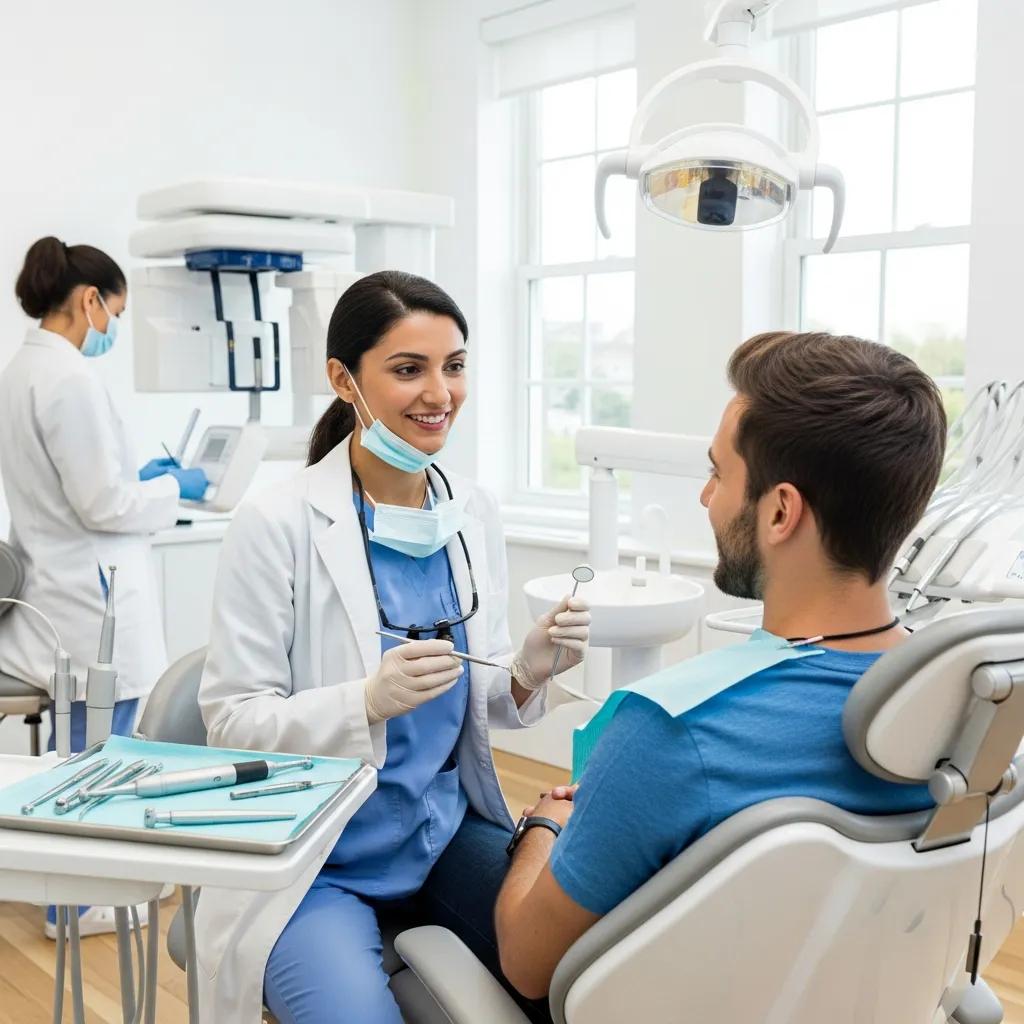
Preventative dental care reduces disease risk by removing plaque, identifying early decay and monitoring oral tissues, which preserves teeth and lowers long-term treatment needs. Routine exams, cleanings, digital X-rays, fluoride treatments and laser therapy work together: exam and X-rays detect issues early, cleanings remove calcified deposits that harbor bacteria, fluoride strengthens enamel, and laser therapy helps treat soft-tissue problems with minimal discomfort. Preventative services also protect overall health because untreated oral infections can affect systemic inflammation and general wellbeing. Understanding routine care clarifies how simple, scheduled steps prevent complex, costly procedures in the future.
The practical components of a preventative visit include an exam, targeted cleaning, necessary X-rays, and personalized home-care coaching to reduce recurrence. Early detection frequently means less invasive restorative work, so consistent preventive care lowers both risk and expense over time. Many families schedule appointments around school and work; pediatric protocols emphasize gentle education and habit formation for lifelong oral health. For new patients and those arranging a first preventive plan, Bleu Dentistry provides accessible options to help patients begin care on a clear, affordable pathway.
This list summarizes core preventative services and primary benefits to help readers scan available options.
- Comprehensive Exam: A clinical and radiographic assessment that identifies decay, gum disease, and oral pathology.
- Routine Cleaning: Professional removal of plaque and tartar to reduce bacterial load and gingival inflammation.
- Fluoride and Laser Therapy: Strengthening enamel and treating soft-tissue issues with minimally invasive techniques.
- Digital X-Rays: Low-radiation imaging for early detection and treatment planning.
These focused services form the foundation of lifelong oral health. Attract new patients and retain existing ones by providing service information and encouraging appointment bookings.
How Do Routine Dental Checkups and Cleanings Protect Your Oral Health?
A routine dental checkup combines a clinical exam and prophylaxis to prevent tooth decay and periodontal disease by removing mineralized plaque and assessing risk markers. Mechanical removal of biofilm during a cleaning reduces the bacteria that initiate cavities and gingivitis, while X-rays and intraoral exams detect hidden decay, bone loss or pathology before symptoms arise. Preventative visits also include risk-based counseling—nutrition, oral hygiene techniques, and smoking cessation support—to lower future disease probability. Regular visits create a care baseline that simplifies monitoring and enables conservative interventions when problems appear.
Preventative maintenance also supports restorative longevity because well-managed gums and plaque control improve outcomes for fillings, crowns, and implants. This emphasis on prevention reduces emergency visits and preserves natural dentition, which supports chewing, speech and facial structure. Understanding these mechanisms clarifies why routine visits are an investment in functional health rather than an optional expense.
What Should You Know About Family and Pediatric Dentistry at Bleu Dentistry?
Family and pediatric dentistry focus on age-appropriate prevention, early habit formation, and minimally invasive interventions that reduce dental fear and future disease. Pediatric exams evaluate eruption patterns, cavity risk, and habit impacts (like thumb-sucking), while family visits coordinate treatment timelines across ages to make care efficient for busy households. Behavior guidance techniques, desensitization strategies, and gentle language help children build positive associations with dental care. These approaches support early intervention—fluoride varnish, sealants and coaching—that lowers lifetime restorative needs.
Parents are advised to schedule the first dental visit by a child’s first birthday or when the first tooth appears to establish monitoring and preventive routines. Family-centered scheduling and combined appointments reduce missed work and make ongoing maintenance manageable. The practice’s compassionate approach helps anxious children and caregivers feel supported and confident about continuing routine care.
How Can Cosmetic Dentistry Enhance Your Smile at Bleu Dentistry Dallas?

Cosmetic dentistry improves appearance while often restoring function by correcting color, shape and alignment issues; common options include professional whitening, porcelain veneers, and dental bonding. Whitening removes extrinsic stains quickly and conservatively, while veneers reshape teeth for proportion and symmetry with durable, aesthetic materials. Bonding repairs chips and minor gaps with tooth-colored composite, offering a conservative, cost-effective alternative to veneers for selected cases. These options are chosen based on the underlying problem, patient expectations, and longevity needs.
Selecting the right cosmetic approach begins with diagnosis of structural integrity, bite function, and color matching; combining whitening with veneers or bonding often yields the most harmonious result. Cosmetic planning commonly uses digital mock-ups and shade guides to set realistic expectations for outcome and maintenance. Patients should balance durability, invasiveness and cost when choosing treatments, and prioritize treatments that preserve healthy tooth structure.
Common cosmetic benefits and when each option is recommended:
- Teeth Whitening: Fast, non-invasive improvement for generalized discoloration.
- Porcelain Veneers: Long-lasting correction for shape, severe discoloration or structural irregularities.
- Dental Bonding: Conservative repair for small chips, fractured edges or minor spacing.
These cosmetic pathways help patients achieve aesthetic goals while supporting oral health fundamentals. The next section explains specific benefits and realistic expectations for whitening and veneers.
What Are the Benefits of Professional Teeth Whitening and Veneers?
Professional teeth whitening provides rapid lightening of stained enamel by applying controlled peroxide agents under professional supervision for predictable shade improvement. This approach typically produces noticeable results within a single visit or a short take-home regimen and preserves tooth structure since no reduction is required. Porcelain veneers, in contrast, offer a more permanent aesthetic correction by covering the visible tooth surface with a ceramic layer that resists staining and can correct shape and alignment issues. Veneers require preparation and careful planning but deliver highly aesthetic outcomes with proper maintenance.
Whitening is suited for patients with primarily color concerns and intact enamel, while veneers fit cases requiring shape correction, masking intrinsic stains, or combining multiple cosmetic changes. Patients should consider maintenance—touch-up whitening versus occasional veneer replacement—and discuss longevity expectations with their dentist. Understanding these trade-offs enables patients to match treatment to expected results and lifestyle.
How Does Dental Bonding Improve Smile Aesthetics?
Dental bonding uses tooth-colored composite resin applied and sculpted to repair chips, close small gaps, or reshape teeth with minimal enamel removal. The process is typically completed in a single visit, requires local anesthesia only rarely, and preserves maximum natural tooth structure compared with veneers or crowns. Bonding is cost-effective and allows quick aesthetic improvements, though composite materials are more prone to staining and wear than porcelain and may need periodic touch-ups. For many patients, bonding offers a practical balance between immediacy, conservation and appearance.
Suitability depends on bite forces, the extent of restoration required, and aesthetic goals; bonding is ideal for small repairs and provisional aesthetic changes, while veneers or crowns are preferred for larger structural problems. Patients seeking a reversible or lower-cost cosmetic step often start with bonding and later transition to more durable materials if desired. The next section covers durable restorative options that replace missing teeth and restore full chewing function.
What Are Dental Implants and How Can They Restore Your Smile in Dallas?
Dental implants are titanium or zirconia posts placed in the jaw to replace missing tooth roots, creating a stable foundation for abutments and crowns that restore chewing function, speech and facial support. The implant integrates with bone through osseointegration, which preserves bone volume and prevents the resorption that often follows tooth loss. Implants restore near-natural function and aesthetics because the crown is designed to match adjacent teeth while the implant maintains alveolar bone. Candidates require sufficient bone and healthy soft tissues, and treatment planning uses imaging and clinical assessment to determine the optimal approach.
Implant therapy typically follows a sequence of consultation, surgical placement, healing for osseointegration, and final restoration, with options for immediate loading in select cases. Material choice—titanium or zirconia—affects biocompatibility and aesthetics, while design variations address single-tooth, multiple-tooth, or full-arch replacement needs. Understanding implant mechanics and timelines helps patients set realistic expectations and plan for phased restorations.
Before the procedure overview, consider how implant types compare across attributes like healing time and aesthetics.
| Implant Type | Attribute | Typical Range/Value |
|---|---|---|
| Titanium Implant | Healing & integration | Strong osseointegration; established track record |
| Zirconia Implant | Aesthetics & metal-free option | Superior color for thin gingival biotype; metal-free alternative |
| Implant-Supported Denture | Load distribution | Stabilizes full-arch prosthesis for improved mastication |
This table clarifies primary distinctions so patients can discuss material choices with their provider. The following subsection outlines procedural steps and candidate suitability.
What Is the Dental Implant Procedure and What Are the Types Available?
The implant procedure begins with a consultation and imaging to assess bone volume and plan implant position, followed by surgical placement of the post into the jaw bone. After placement, a healing period allows osseointegration—bone bonding with the implant surface—typically lasting several weeks to a few months depending on biology and implant system. Once integrated, an abutment and custom crown restore the visible tooth, with options for screw-retained or cemented restorations tailored to hygiene and access. Types include single-tooth implants, implant-supported bridges for multiple missing teeth, and full-arch implant-supported prostheses for edentulous arches.
Immediate-load protocols can sometimes provide provisional teeth at the time of surgery for select patients with adequate primary stability. Choosing among titanium and zirconia implants depends on aesthetic needs and tissue biotype; titanium has long-term evidence while zirconia offers a metal-free, tooth-colored alternative. Proper planning, including periodontal health and occlusal evaluation, is essential for predictable results.
How Much Do Dental Implants Cost in Dallas and What Financing Options Are Available?
Implant cost varies with complexity, materials, number of implants and restorative choices; factors include bone grafting, imaging, and the final crown material. Price transparency helps patients plan, and many practices offer financing and phased treatment plans to distribute cost. Bleu Dentistry accepts most insurances for applicable services and offers 0 percent financing plans to help patients access necessary restorative care without delaying treatment. Discussing a personalized estimate during consultation yields the most accurate cost projection based on the specific clinical situation.
| Treatment Component | Typical Cost Factor | Financing/Insurance Notes |
|---|---|---|
| Single implant & crown | Laboratory and material-dependent | Financing available; insurance may cover portion depending on policy |
| Bone grafting | Adds surgical/biologic cost | May be required prior to implant; financing can include grafting |
| Full-arch restoration | Multiple implants and prosthesis | Phased payments and 0 percent financing plans can spread cost |
This table provides a compact view of cost drivers and financing pathways so patients can weigh options before committing to surgery. Attract new patients and retain existing ones by providing service information and encouraging appointment bookings.
How Does Invisalign Dallas Provide a Clear Alternative to Traditional Braces?
Invisalign uses a series of clear, removable aligners to move teeth incrementally through digitally planned stages, offering a discreet orthodontic option that corrects many malocclusions while enabling easier hygiene compared with fixed braces. Aligners apply controlled forces to teeth as planned by the clinician using digital scans and treatment software, with patients typically switching aligners every one to two weeks. The main benefits include reduced visibility, fewer dietary restrictions, and simplified oral hygiene, which together improve patient comfort and compliance. Candidate suitability depends on case complexity, patient discipline, and bite considerations; complex skeletal issues may still require traditional fixed appliances.
Treatment planning begins with a consultation and digital records to create a customized staged plan; throughout treatment, periodic monitoring ensures movements match predicted outcomes. Compliance—wearing aligners 20–22 hours daily—is critical to achieving timelines comparable to traditional braces. A concise comparison helps readers evaluate cost, time and lifestyle tradeoffs.
| Option | Attribute | Typical Range/Value |
|---|---|---|
| Invisalign | Visibility & convenience | Clear, removable aligners; good for mild-to-moderate cases |
| Traditional Braces | Control & complexity | Effective for complex tooth/bite movements; fixed appliances |
| Treatment Time | Average duration | Invisalign and braces overlap; case-dependent |
This comparison summarizes key decision points for patients considering clear aligners versus fixed appliances. Attract new patients and retain existing ones by providing service information and encouraging appointment bookings.
What Is the Invisalign Treatment Process and Who Is a Good Candidate?
Invisalign treatment begins with a diagnostic visit and digital scanning to map current tooth positions, then the lab creates a series of custom clear aligners to guide incremental movement. Patients typically change aligners at prescribed intervals and return for periodic reviews to confirm progress and address refinements. Good candidates include adults and teens with mild-to-moderate crowding, spacing, or bite issues who can commit to wearing aligners most hours of the day; severe skeletal discrepancies may require combined orthodontic and surgical approaches. Advantages include improved aesthetics during treatment and easier brushing and flossing compared with fixed braces.
Successful outcomes rely on adherence, proper attachment placement when needed, and follow-up for refinements. For complex cases, hybrid strategies combining aligners with auxiliaries may be recommended to achieve optimal tooth positions.
How Does Invisalign Compare to Braces in Cost and Treatment Time?
Invisalign and traditional braces have overlapping cost ranges; variables include case complexity, treatment length, and operator experience. Invisalign often commands a premium for the clear aligner system and digital workflow, but savings in shorter appointments and improved hygiene can offset some costs over time. Treatment time depends on movement goals; mild-to-moderate cases with aligners often complete in similar timelines to braces, while very complex movements may take longer or need adjunctive appliances. Maintenance differences include removable aligners that require discipline but simplify oral hygiene versus fixed braces that can complicate cleaning but provide continuous force delivery.
Patients should weigh aesthetic priorities, lifestyle impact and the value of predictable digital planning when choosing between options. A personalized consultation establishes expected cost, timeline and the most suitable appliance for the individual’s orthodontic goals.
When Should You Seek Emergency Dental Care in Dallas and What Services Are Available?
Dental emergencies require prompt attention when pain, swelling, bleeding, or tooth loss threaten health or function; common urgent situations include severe toothache, a knocked-out tooth, fractured teeth, and uncontrolled soft-tissue bleeding. Immediate evaluation identifies whether infection, structural damage, or vascular compromise is present, and triage focuses on pain control, stabilization and infection prevention. First-aid steps—cleaning an avulsed tooth, applying pressure to bleeding, or cold compression for swelling—help preserve outcomes until professional care is reached. Rapid professional response reduces the risk of permanent damage and improves restoration prospects.
Emergency dental services typically include diagnosis, pain management, suturing for soft-tissue injuries, temporary or definitive restorations, root canal therapy for infected pulps, and re-implantation attempts for avulsed teeth. Triage protocols prioritize airway, bleeding and severe infection management before restorative procedures. Knowing when to seek urgent care and how clinicians manage common emergencies empowers patients to act decisively when issues arise.
This list outlines immediate actions to take for frequent dental emergencies.
- Severe Toothache: Rinse, floss to remove debris, and contact emergency care for diagnosis and pain control.
- Knocked-Out Tooth: Handle by the crown, rinse gently, and keep moist in milk or saline while seeking urgent re-implantation.
- Broken or Fractured Tooth: Save fragments, apply cold to reduce swelling, and obtain prompt evaluation to preserve structure.
Prompt action preserves options for repair and recovery. Attract new patients and retain existing ones by providing service information and encouraging appointment bookings.
What Are Common Dental Emergencies and How Does Bleu Dentistry Handle Them?
Common emergencies include acute pulpitis, dental trauma, fractured restorations, and abscesses; clinicians address these by prioritizing infection control, pain relief, and structural stabilization. Emergency workflow typically begins with triage and pain management, followed by diagnostic imaging and a treatment plan that may include antibiotics, drainage, temporary crowns or definitive endodontic therapy. For traumatic injuries, timely repositioning or re-implantation can mean the difference between preserving and losing a tooth. Communication about follow-up care and preventive measures reduces recurrence and supports healing.
Bleu Dentistry’s approach emphasizes compassionate triage and efficient transition from emergency stabilization to definitive care, ensuring patients understand immediate steps and longer-term restoration pathways. The goal is to restore function quickly while minimizing risk and anxiety during urgent visits.
How Can Sedation Therapy Help Patients with Dental Anxiety During Emergencies?
Sedation therapy offers graduated anxiety and pain control—from mild oral sedatives to moderate IV options—allowing anxious patients to tolerate necessary emergency procedures with less distress. Sedation reduces sympathetic arousal, improves patient cooperation, and enables clinicians to perform more definitive care in fewer visits, which is especially valuable during urgent interventions. Safety protocols include medical history review, monitoring, and post-sedation recovery guidance to ensure appropriate selection and oversight. Dr. Allen Charles is noted for patience with anxious patients and uses compassionate techniques alongside sedation to improve patient comfort.
Selecting an appropriate sedation level depends on medical history, procedure complexity and patient preference; discussing options before emergency intervention clarifies expectations and safety measures. Patients with severe dental fear often benefit from a planned sedation strategy to reduce future emergency avoidance and maintain ongoing oral health.
How Does Bleu Dentistry Ensure a Comfortable and Affordable Dental Experience in Dallas?
Bleu Dentistry combines clinical measures and patient-centered policies to reduce barriers to care: sedation options for anxious patients, acceptance of most insurances, 0 percent financing plans, and 24-hour online scheduling to simplify access. These operational elements work together to make timely care feasible and comfortable, while clinical protocols—laser therapy, digital imaging and gentle behavior guidance—reduce discomfort during procedures. Transparency about costs and payment options helps patients make informed choices and avoid deferring necessary treatment due to financial uncertainty. The practice’s compassionate team and Dr. Allen Charles’ patient-first approach further support a positive experience.
Below is a concise table of practice-level offers and how they support patient access and comfort.
| Offer | Attribute | Value/Offer |
|---|---|---|
| New Patient Special | Inclusions | $159 includes X-rays, comprehensive exam, regular cleaning with free laser treatment, and fluoride treatment |
| Financing | Payment flexibility | 0 percent financing plans to spread treatment cost |
| Access & Coverage | Scheduling and insurance | 24-hour online scheduling and acceptance of most insurances |
This table makes offers easy to scan so prospective patients can quickly identify convenience and affordability features. Attract new patients and retain existing ones by providing service information and encouraging appointment bookings.
What Sedation Options Does Dr. Allen Charles Offer for Anxious Patients?
Sedation options range from nitrous oxide and oral sedation to deeper IV sedation when clinically warranted, providing scalable anxiety control tailored to patient needs. Nitrous oxide offers rapid-onset mild anxiolysis with quick recovery, whereas oral sedatives produce moderate sedation suitable for longer procedures; IV sedation delivers more profound anxiolysis under continuous monitoring for complex or highly anxious patients. Safety is paramount: pre-sedation screening, monitoring equipment and trained providers ensure appropriate selection and oversight. Dr. Allen Charles’ patient-first approach emphasizes clear communication and gradual desensitization for nervous patients.
Using sedation can reduce procedure-related stress, enable more efficient care delivery, and improve long-term adherence to recommended treatment plans. Discussing options during consultation determines the safest, most comfortable plan.
How Does Bleu Dentistry Accept Insurance and Provide 0% Financing Plans?
Bleu Dentistry accepts most insurance plans and offers transparent billing practices to help patients understand coverage and out-of-pocket responsibility for proposed treatments. Front-desk staff assist patients in verifying benefits and estimating patient portions before treatment begins to reduce surprises. For larger restorative or cosmetic plans, 0 percent financing plans provide an interest-free option to spread payments and enable timely access to care without undue financial strain. Eligibility and terms are discussed during the scheduling or consultation process so patients can choose the pathway that fits their budget.
Practical steps to verify coverage include providing insurance details at scheduling, requesting benefit estimates, and discussing financing options with the administrative team. Clear upfront information empowers patients to proceed with confidence and reduces treatment delays.
- Verify Benefits: Provide insurance details at scheduling for a pre-visit estimate.
- Discuss Financing: Review 0 percent financing plans for larger treatment plans.
- Schedule Conveniently: Use 24-hour online scheduling to find timely appointments.
These policies and practical steps make high-quality dental care more predictable and attainable for Dallas families and individuals.
Attract new patients and retain existing ones by providing service information and encouraging appointment bookings.